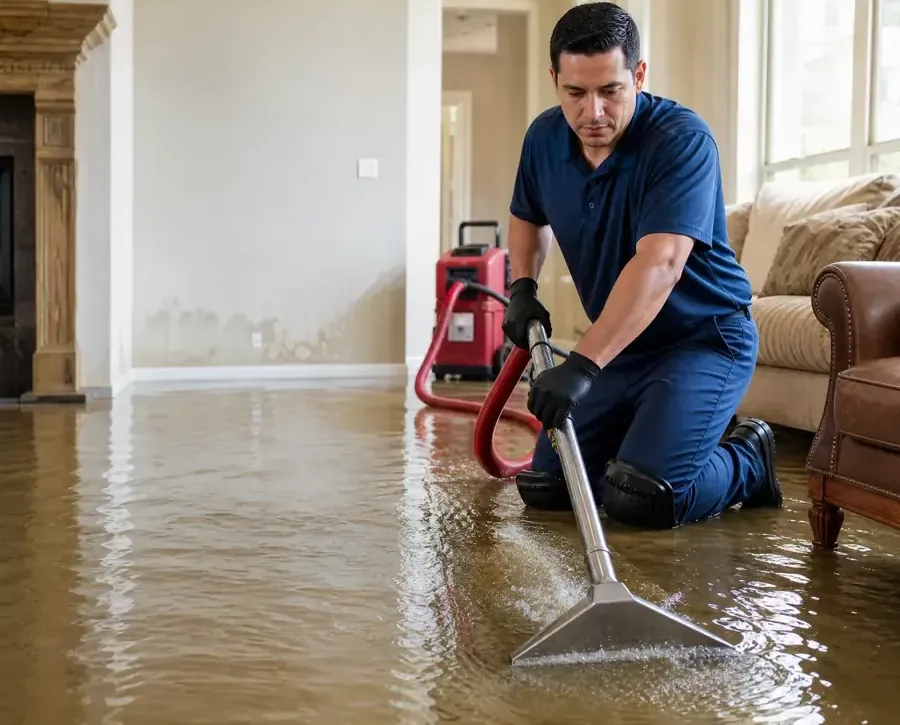
Belleair Bluffs has more condominium units than single-family homes, with about 650 condominium units and 320 apartments beside roughly 540 single-family houses. In buildings like that, a leak in one kitchen or bathroom rarely stays in one home. This post explains how water travels between units and how the cleanup is scoped.
Key takeaways
- Housing here leans toward shared buildings, so one leak can reach the unit below and the units beside it.
- Shut off the water to the unit if it is safe, then tell the property manager or association so the building can act.
- The source decides who is responsible, so photograph the damage and the suspected source before anything is cleaned.
- Crews measure moisture in every affected unit, not only the one where the leak began.
- Drywall, insulation and flooring that stay wet are removed, while framing and slabs are dried.
Why one leak becomes several households' problem
The 2020 Census counted 1,509 housing units in the city, and the land area is almost completely built out. Many of those homes share floors, ceilings and walls with a neighbor.
That means a failed dishwasher hose or an overflowing tub is a building event as much as a household one. Local water damage restoration pros treat each affected unit as its own scope.
Because so many households share structure, the cleanup works best when everyone on the affected floors is told at the same time.
- About 650 condominium units, more than the single-family homes.
- About 320 apartments.
- About 540 single-family homes.
How water travels through a shared building
Water moves along the path of least resistance. In a building with several units, that path often leads straight to a neighbor.
Down through floors and ceilings
Water from a bathroom or kitchen drops through the floor to the ceiling of the unit below. It follows pipes, vents and light fixtures, and it shows up as a stain or a drip.
Sideways through shared walls
Water that spreads along a shared wall can soak the base of the drywall next door. Cabinets, baseboards and flooring on the other side may be wet before anyone notices.
Through pipe chases and wall openings
Pipe chases and wall openings connect floors. Water that enters a chase can reach several units before it appears on any surface, which is why the crew checks beyond the visible stain.
First steps in the unit where the water starts
The goal at the start is to stop the source and limit how far the water travels. A few quick actions help the whole building.
- Shut off the water at the unit's valve or the fixture's shutoff.
- Turn off power to wet areas if outlets or appliances are involved.
- Lift furniture, rugs and electronics out of the water.
- Photograph the source and every wet surface.
- Tell the property manager or association what happened.
- Move rugs, boxes and furniture away from shared walls.
- Keep a written list of everything that got wet.
Who to tell, and in what order
A leak that crosses units involves several parties. Telling the right ones early keeps the building from losing time.
- The property manager or association, who can shut off shared supply and open access to neighboring units.
- The neighbor below or beside, who may not yet know water has reached them.
- The insurer, with photos and a clear description of the source.
- A plumber, who finds and repairs the source.
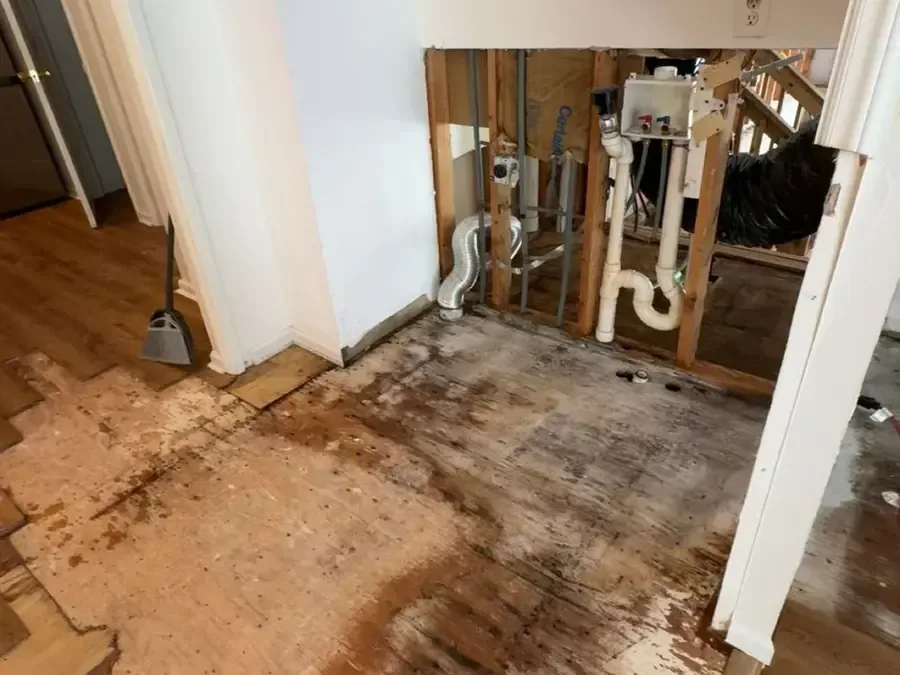
When the unit with the leak is empty
The 2020 Census counted 1,509 housing units in the city, and 16.8 percent of them were vacant. A leak in an empty unit can run unseen until a neighbor notices a stain or a sound.
That makes neighbors and the property manager the early warning system for the building.
- Report a ceiling stain or a dripping sound to the property manager early.
- Ask the manager to enter the unit above and check the source.
- Keep a shared contact list for owners who live elsewhere.
How the crew scopes each affected unit
A water extraction team does not only work the unit where the leak began. It measures moisture in each home the water touched, then sets equipment where the readings are highest.
When water reaches a ceiling, ceiling leak water damage work opens the wet drywall and dries the joist bays above.
- Moisture is mapped floor by floor and unit by unit.
- Standing water is extracted before equipment is set.
- Wet insulation and soft drywall are removed.
- Air movers and dehumidifiers run until readings reach a dry reference.
- Neighboring units are measured even when they look dry.
Mistakes that spread the damage
A shared building punishes delay. A few common missteps turn a one unit loss into a building wide one.
- Waiting to see whether a stain grows before telling the manager.
- Mopping up and closing a wet room without opening the walls.
- Letting neighbors guess at the source instead of photographing it.
- Skipping the unit below because the damage looks small from above.
- Running a household fan across wet drywall instead of taking readings.
Records that help with the building and the insurer
When several households are affected, a clean record protects everyone. The crew's logs show what was wet in each unit and when it was dried.
Owners and tenants should also keep their own photos, since each unit may be covered under a different policy.
- Photos of the source and each wet surface.
- The crew's moisture readings and equipment logs.
- Receipts for emergency repairs and temporary housing.
- Written notes of who was told and when.
Questions to ask before work begins
A loss that crosses units needs a plan everyone can follow. These questions put the scope, the access and the records on paper.
- Which units will be measured, and who gives access?
- Which materials will be removed in each unit?
- What readings show that a unit is dry?
- How will the logs be shared with the building and with each insurer?
Questions
Who pays when a leak damages the unit below?
It depends on the source, the building rules and the policies involved. Photos of the source and the damage help sort that out.
Can the crew dry a neighbor's unit too?
Yes, with access from the neighbor. The crew measures moisture in each affected unit and dries them together so the building does not stay wet.
Why does drywall in the unit below get removed?
Drywall that stays wet loses strength and can grow mold. Readings show whether it can be dried in place or must come out.
What if nobody is home in the unit with the leak?
The property manager can shut off shared supply and open access. Neighbors should report the leak early, since water keeps spreading.
Do renters and owners handle this differently?
Their responsibilities differ, but the first steps are the same: stop the water, document the damage and tell the building.
How far can water travel in a shared building?
Water can move down through floors, sideways along shared walls and through pipe chases. The crew's moisture readings show how far it has gone.
What if a neighbor will not give access?
The property manager or association can usually arrange access to shared systems and common areas. Moisture readings from the accessible side still show whether water crossed the wall.