Standing water removal
Water Extraction and Removal in Belleair Bluffs, FL
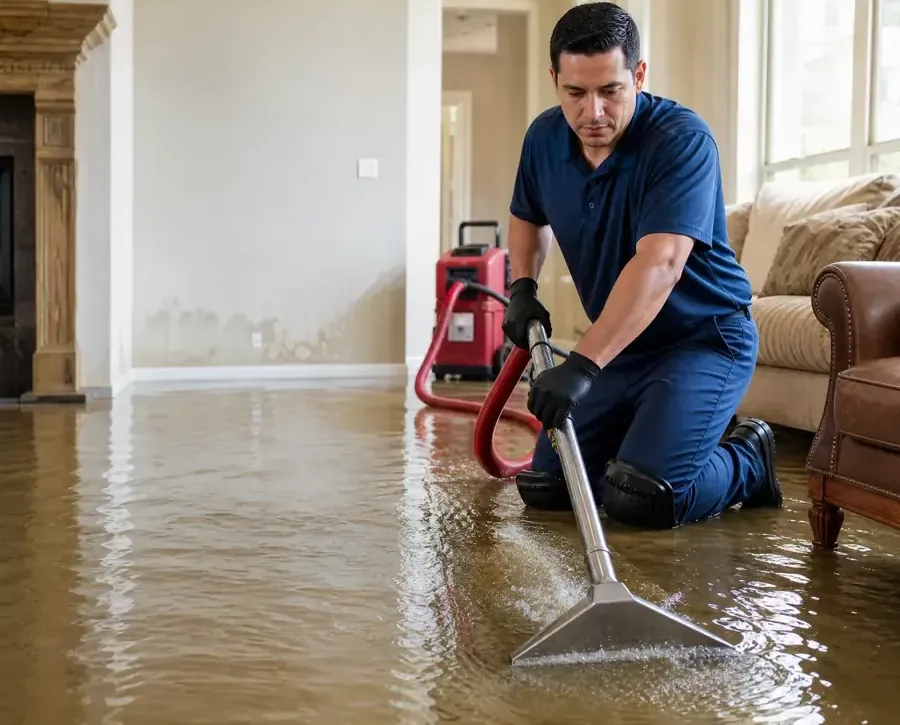
Pumps and extraction wands pull standing water off floors in condominium units, apartments and houses, so the drying team can begin work before the moisture climbs into the walls and subfloor.
(888) 621-2041Get the standing water out- 24/7 extraction crew
- Truck mounted pumps
- Moisture mapped afterward
First steps
What to do first for water extraction and removal in Belleair Bluffs
- 01
Stop the source
Find the shutoff valve for the fixture or the building and turn it off.
- 02
Photograph the loss
Pictures of the water, floors and damaged items protect the claim.
- 03
Extract the water
Pumps and wands remove what is standing and what has soaked into the pad.
- 04
Take readings
Moisture meters show what the drying equipment still has to handle.
The process
How water extraction and removal is handled in Belleair Bluffs, FL
- 1
Pump
Bulk water goes out first.
- 2
Wand
Carpet, pad and tile joints are worked by hand.
- 3
Sort
Wet items are separated into keep and discard piles.
- 4
Measure
A meter check confirms how much moisture is left.
Typical cost ranges
What does water extraction and removal cost in Belleair Bluffs, FL?
Water extraction usually costs $400 to $3,500 here, depending on how many rooms are wet, the water category and the flooring involved. The low end is one wet room, and the high end is a whole floor or a contaminated loss.
One wet room
$400 to $1,200
- Pump and wand pass
- Pad pulled if soaked
- Readings recorded
Several rooms
$1,200 to $2,500
- Longer extraction pass
- Pad removed in wet rooms
- Baseboards checked
Whole floor or worse
$2,500 to $3,500+
- Contaminated water handled separately
- Porous materials cut out
- More equipment days
Ranges are typical, not a quote: the water category, square footage, material class and how fast drying started move the number most. Run the water damage cost calculator for a closer planning range.
Standing water is the first problem to solve, and the fastest one to measure. Belleair Bluffs has about 650 condominium units and 320 apartments beside roughly 540 single-family homes, so a supply failure often reaches a neighbor's floor as well as the origin unit.
What the extraction crew does first
- Shuts off or confirms the water source is stopped
- Pumps pooled water, then works wands across carpet and pad
- Lifts furniture, rugs and baseboard covers off wet floors
- Reads walls and subfloor with a moisture meter
Everything wet is photographed before it moves, and structural drying follows once the standing water is gone.
Why the water category changes the work
Clean supply water can often be extracted and the carpet saved. Gray water from a washer or dishwasher needs a closer look at the pad. Anything that came up through a floor drain is treated as contaminated, and porous materials in its path are cut out instead of dried. The restoration team sorts the category before choosing tools, since the category decides what stays.
When more than one unit is wet
In a shared building the extraction crew checks the floor below and the wall beside the loss, because water travels along framing and slab edges. Each unit gets its own readings, so every owner or tenant has numbers to hand to their own insurer. Other water services here are listed on the Belleair Bluffs service hub.
Service area
Water extraction and removal across Belleair Bluffs and nearby communities
Extraction visits cover all of ZIP code 33770 in Belleair Bluffs, a city at the mainland end of the Belleair Causeway, from condominium buildings and apartment complexes to single-family homes and small shops.
The same service nearby: water extraction and removal in Dunedin, Indian Rocks Beach, Redington Shores.
Water damage restoration in Belleair Bluffs · every town covered
Related
Related water damage services in Belleair Bluffs
Questions
Water Extraction and Removal questions in Belleair Bluffs, FL
Can carpet be saved after water extraction?
Often, when the water was clean and the carpet is lifted and dried soon after the loss. The pad underneath usually has to go, because it holds water like a sponge.
What happens to water that reaches the unit below?
Lower units are checked too, ceiling and walls, with separate readings for each unit. The source is usually in the upper unit's pipes or fixtures. Stains on the lower ceiling often appear first.
Is a wet vacuum enough for a flooded room?
A household wet vacuum clears the surface but leaves water in the pad, the subfloor and the wall bottoms. Truck mounted pumps and wands pull far more, and meters then show what is left.
Who pays for extraction in a rented apartment?
That depends on the lease and on where the water came from. The mitigation team documents the source and the affected rooms, which gives the landlord, tenant and insurers the same record to work from.
What if the water came from a flood?
Flood damage is often a separate insurance matter, since most homeowners and renters policies leave it out. See storm surge and flood cleanup for how that work differs.
24/7 dispatch
Standing water keeps soaking in while it waits
The extraction crew removes the water, sorts what can stay and records readings in each affected unit, so the next step has a clear starting point.