Water rising through the floor
Slab Leak Water Damage in Belleair Bluffs, FL
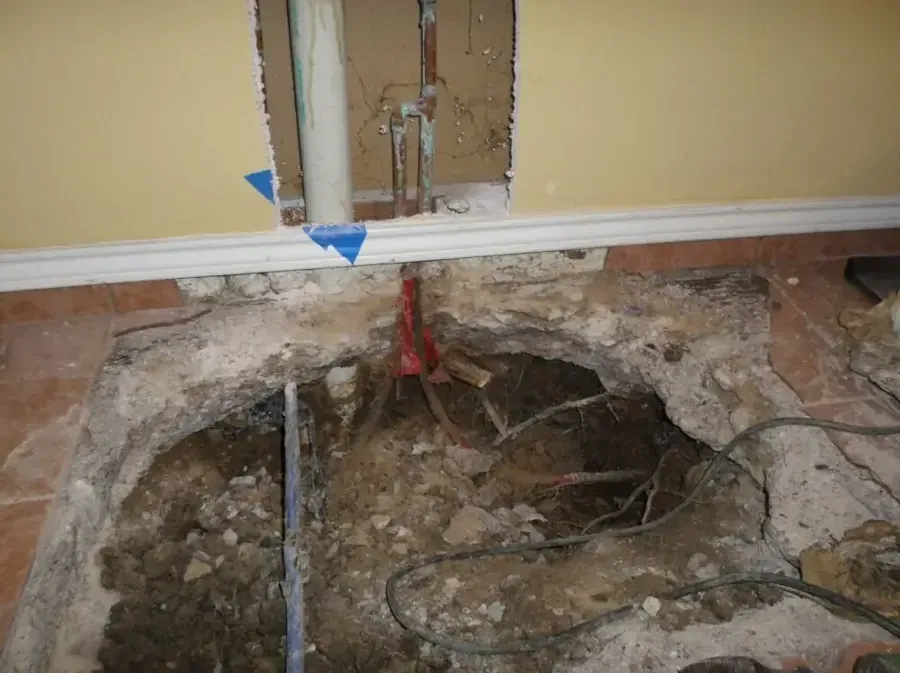
When a pressurized pipe in or under the floor slab fails, water comes up through tile and laminate before anyone sees a drip. The drying team lifts the wet flooring, dries the concrete and records every reading.
(888) 621-2041Get the wet slab mapped and drying- 24/7 slab leak dispatch
- Concrete moisture readings
- Desiccant drying when needed
First steps
What to do first for slab leak water damage in Belleair Bluffs
- 01
Shut the water off
Close the main or the unit shutoff to relieve the pipe.
- 02
Watch the meter
Make sure the dial stops once the water is off.
- 03
Stay off soft spots
Keep weight off lifting tile or swollen laminate.
- 04
Document the floor
Photograph warm spots, stains and any raised flooring.
The process
How slab leak water damage is handled in Belleair Bluffs, FL
- 1
Chart the moisture
Meters trace the wet zone across the floor.
- 2
Lift the flooring
Wet tile, laminate and baseboards removed.
- 3
Tent the area
A tight zone set over the slab.
- 4
Dry the concrete
LGR and desiccant units run to the readings.
Typical cost ranges
What does slab leak water damage cost in Belleair Bluffs, FL?
Drying after a slab leak usually costs $1,500 to $9,000 here, on top of the plumbing repair. The wet area, the flooring, any cabinets over the leak and how long it ran before it was found set the figure.
Caught early
$1,500 to $3,000
- One room affected
- Baseboards and pad pulled
- Slab dried where it sits
A room or two
$3,000 to $6,000
- Tile or laminate taken up
- Lower drywall opened
- Desiccants if readings stall
Under the cabinets
$6,000 to $9,000+
- Kitchen or bath cabinets removed
- Large drying zone
- More drying days
Ranges are typical, not a quote: the water category, square footage, material class and how fast drying started move the number most. Run the water damage cost calculator for a closer planning range.
A slab leak is a pressurized water pipe failing inside or beneath a concrete floor. In a stacked building, the water can spread under the flooring of one unit and wick into shared walls, so the moisture map often has to reach into the neighboring unit as well.
How a slab leak shows itself
- The water meter keeps moving with every fixture off
- A warm patch on the floor above a hot water pipe
- Grout that stays damp, loose tile or swelling laminate
- A higher water bill with no obvious cause
A meter test with every fixture shut off is the quickest first check at home.
Plumber and drying team, side by side
A plumber pins down the failed pipe with electronic leak detection, then repairs it through the slab or reroutes it overhead. The drying team works the water side at the same time: it maps the wet area, lifts flooring and baseboards over it and starts the concrete drying as soon as the leak is stopped. Burst pipe drying follows the same order when the failure is in a wall.
Getting water out of concrete
Concrete is a Class 4 material: it soaks up water deeply and releases it slowly. The drying team tents the wet area, runs LGR dehumidifiers and brings in desiccant units when readings stall, and checks the same marked spots every day until they match an unaffected reference.
Service area
Slab leak water damage across Belleair Bluffs and nearby communities
Coverage reaches every street in ZIP 33770, from the single-family blocks to the apartment and condominium buildings and offices near the mainland end of the Belleair Causeway.
The same service nearby: slab leak water damage in Dunedin, Indian Rocks Beach, Redington Shores.
Water damage restoration in Belleair Bluffs · every town covered
Related
Related water damage services in Belleair Bluffs
Questions
Slab Leak Water Damage questions in Belleair Bluffs, FL
How is a hidden slab leak located?
A plumber uses electronic listening gear, pressure tests and sometimes a thermal camera to find the pipe. The drying team then maps how far the water has moved under the flooring and into the walls.
Does every floor in the unit come up?
No. Only flooring over the wet area is normally lifted so the concrete can breathe. The moisture readings draw that boundary, and dry rooms are left alone.
How long does a slab take to dry?
Usually four to ten days. Concrete lets go of water slowly, so desiccant units are added when the numbers stop dropping, and the equipment stays until the slab matches a dry reference.
Will insurance pay for slab leak water damage?
Many policies cover sudden water damage and the cost of reaching the pipe, though not always the pipe itself. Check the policy and ask the insurer before work moves past mitigation.
Why not just run fans on the floor?
Fans move air across the surface, but water deep in concrete needs dry, warm air held over it. A tented zone with LGR and desiccant dehumidifiers does that far faster, which is the core of structural drying.
What if the water reached the unit next door?
Tell the owner or manager right away. The restoration team maps both sides, keeps separate readings and photos for each unit and dries them together.
24/7 dispatch
Slab leak under the unit? Have the concrete dried properly.
The drying team lifts what holds the water, dries the slab and wall bottoms and keeps a daily log for the adjuster.