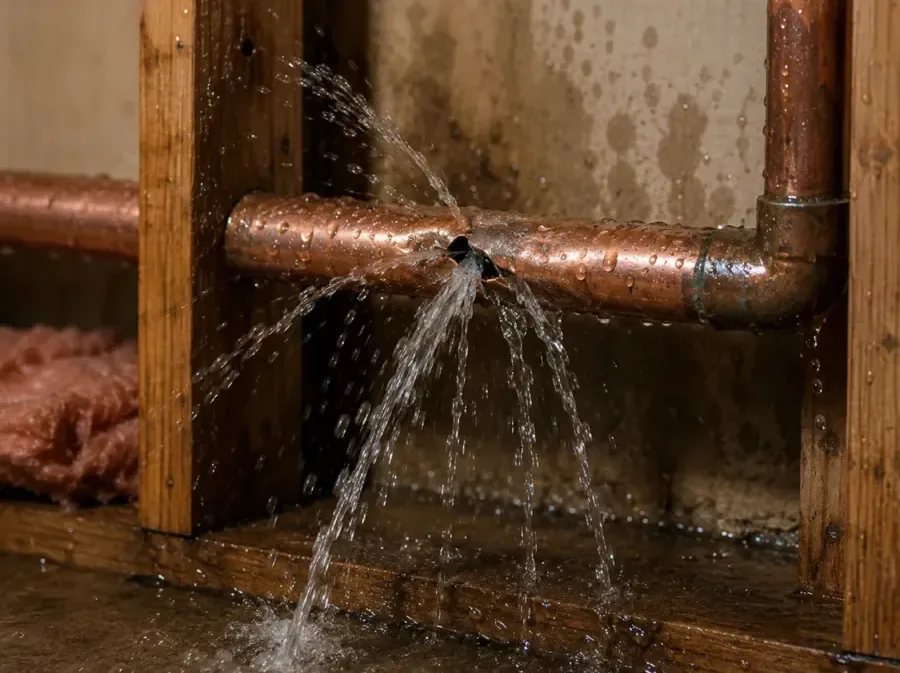
A pinhole leak does not announce itself like a burst pipe. It weeps or sprays inside a wall or ceiling, often for weeks, and the first sign is a stain, a smell or a higher water bill. Housing data for the city shows why this matters: nearly two in three Dunedin homes were built in 1979 or earlier, and only about 6.5 percent in 2000 or later.
Key takeaways
- A pinhole leak is a slow, hidden loss, while a burst pipe floods a room fast.
- Stains, musty smells, soft drywall and a rising water bill are the usual first signs.
- A water meter check with every fixture off shows whether water is moving through the house.
- A plumber repairs the source, and the restoration crew opens the wall and dries the cavity.
- Wet insulation and soft drywall are removed, while framing is dried to a dry reference.
Pinhole leak or burst pipe: how they differ
Both are supply pipe failures, but they behave very differently. A burst pipe sends water across a floor, and the household notices it quickly.
A pinhole leak releases a thin stream or a slow weep. The water soaks insulation and drywall from the inside, so the damage grows quietly.
- Burst: sudden flooding, a clear source, obvious damage in the room.
- Pinhole: slow staining, odor or a damp wall with no visible puddle.
- Both need the water shut off, the source repaired and the cavity dried.
Warning signs inside the house
Hidden leaks leave clues long before a ceiling comes down. Walking through the house with a flashlight and a little patience can find most of them.
- A brown or yellow stain on a ceiling or the upper part of a wall.
- Paint that bubbles, peels or feels soft to the touch.
- A musty smell in a closet, cabinet or hallway that does not go away.
- Warm spots or damp patches on a floor over a supply pipe.
- The sound of water running when every fixture is off.
- A water bill that climbs with no change in how the home is used.
A simple water meter check
The water meter is the quickest way to tell whether water is moving through the house. The test needs no tools.
If the meter moves while everything is off, water is going somewhere it should not, and a plumber should look for the source.
- Turn off every faucet, appliance and ice maker in the home.
- Read the meter and note the number.
- Wait a short while without using any water.
- Read it again, and if the number changed, there is a leak.
Why older homes carry more risk
South Dunedin was developed mostly in the 1940s and 1950s, and the city's housing assessment puts nearly two in three homes at 1979 or earlier. Pipes and fittings that old have had many years to wear.
Age alone does not prove a leak, but it raises the odds that something inside a wall has started to fail. Older homes also hide more of their plumbing behind plaster and tight chases.
- Look at the oldest bathrooms and kitchens first.
- Check below sinks and behind toilets for staining.
- Pay attention to ceilings below a bathroom or laundry room.
What a slow leak does to a house over time
A hidden leak works on the house a little each day. Insulation soaks up the water, drywall softens from the inside, and framing stays damp.
Left alone, a leak that began as a stain can grow into a ceiling that sags, floors that cup and a smell that no cleaning removes.
- Insulation holds water against the drywall and framing.
- Drywall paper softens and the surface bubbles.
- Floor finishes cup or lift where the subfloor stays damp.
- Damp wood and paper give mold a place to start.
A walk-through checklist for an older home
A slow Saturday walk-through can catch a leak before it spreads. The checklist below needs only a flashlight and a little patience.
- Look under every sink for staining, swollen cabinet bases or a damp shutoff.
- Check behind toilets and around the edges of tubs and showers.
- Press the drywall below windows and along exterior walls for soft spots.
- Look at ceilings below bathrooms, the laundry room and the kitchen.
- Open the access panel behind a tub if there is one.
- Check the water heater and the washer connections.
- Note any room that smells damp when the rest of the house does not.
What the crew does once the leak is found
A plumber stops the leak and repairs the pipe. The burst and pinhole pipe leak work that follows is about removing and drying what the water reached.
Stopping the water and finding the extent
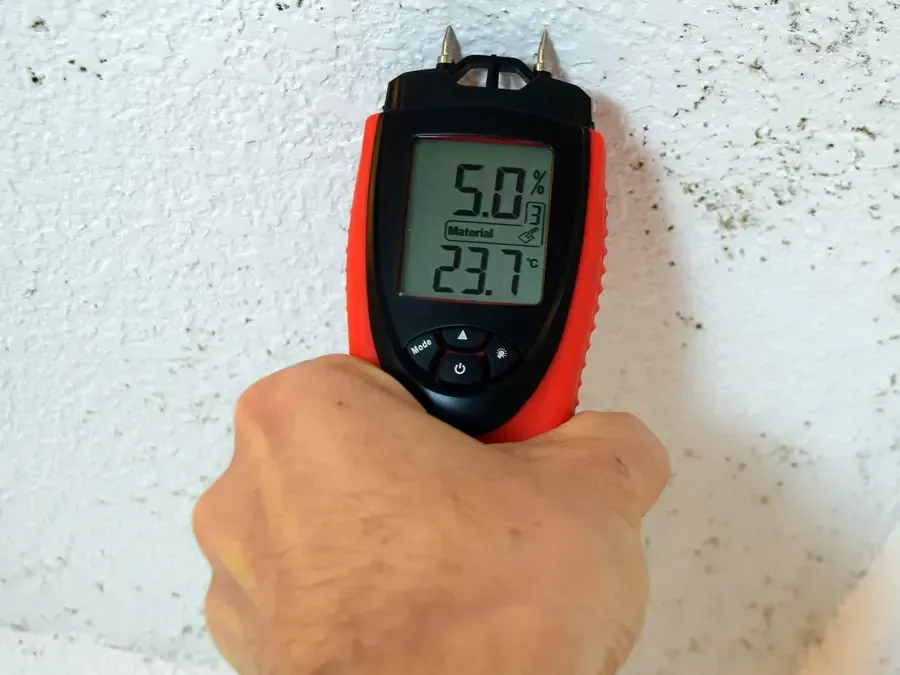
The crew maps the wet area with moisture readings and thermal imaging, and it is often larger than the stain. Openings are cut where the readings are highest.
Opening and drying the cavity
Soaked insulation and soft drywall are removed. Framing is dried with air movers and dehumidifiers until readings come within 2 to 4 points of a dry reference.
The structural drying stage is what keeps a slow leak from becoming a mold problem later.
Ceilings, cabinets and floors: where hidden water shows up
A leak in a wall rarely stays in the wall. Water follows the pipe and the framing, then appears at the lowest or weakest point.
If a stain shows up below a bathroom or laundry room, a ceiling leak crew can trace it back through the cavity to the source.
- Ceilings show rings or sagging below the source.
- Cabinet bases swell and lift where water collects.
- Floors cup or lift near an outside wall or a bath.
When to bring in a plumber and a restoration crew
A plumber finds and fixes the pipe. A restoration crew handles everything the water touched, and both are needed after a hidden leak.
The sooner the pipe is stopped, the less there is to dry.
- Bring in a plumber when the meter moves with every fixture off.
- Bring in a restoration crew when drywall is soft, a ceiling is stained or a floor has lifted.
- Keep photos of stains, readings and the repair for the insurer.
Questions
What is the difference between a pinhole leak and a burst pipe?
A burst pipe releases a large amount of water quickly, while a pinhole leak releases a small amount slowly. Both can soak walls, but a pinhole leak often goes unseen for weeks.
How can I tell if I have a hidden leak?
Look for stains, soft drywall, a musty smell and a higher water bill. A water meter test with every fixture off confirms whether water is moving.
Do older homes leak more often?
Older plumbing has had more years of wear, so the odds are higher. In Dunedin, nearly two in three homes were built in 1979 or earlier.
Who fixes the pipe and who dries the wall?
A plumber repairs the pipe. The restoration crew removes wet material and dries the cavity, so the two jobs go together.
Will the wall always need to be opened?
Often yes. The cavity cannot be dried properly without access, and readings show how much drywall and insulation must come out.