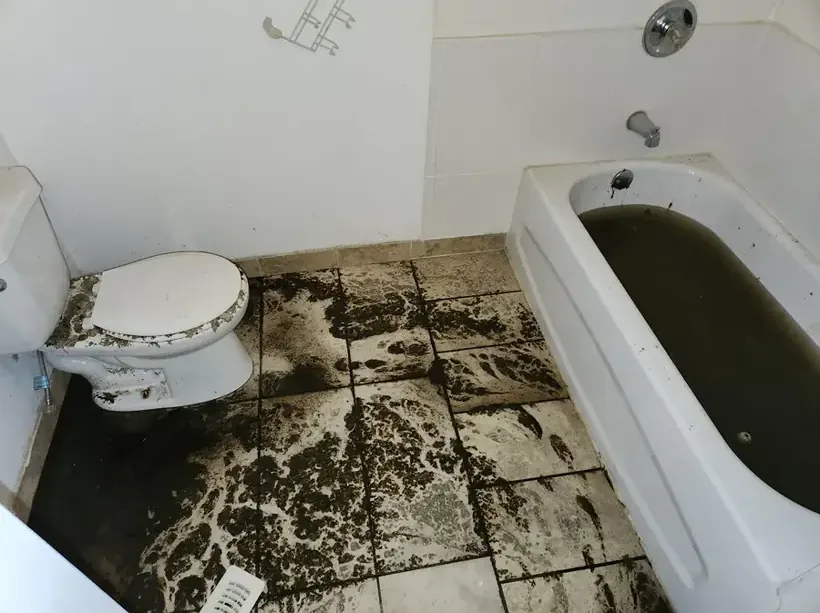
Sewage coming up through a tub, shower or toilet drain is a health problem before it is a property problem. It is Category 3 water from the first drop, and it needs different handling than a leak. This post covers the first steps, why backups can follow wet weather here, and what the cleanup removes.
Key takeaways
- Sewage is Category 3 water, so keep people and pets out and avoid touching it.
- Stop using sinks, tubs, toilets and the washer until the blockage is cleared.
- Porous materials such as carpet, pad and lower drywall are removed, while hard surfaces are cleaned and treated.
- A plumber clears or repairs the blockage, and the cleanup crew restores what the backup touched.
- Heavy rain and a shallow water table can leave drainage under strain, so backups can follow wet weather.
Why a backup is Category 3 from the start
Water from a clean supply pipe is Category 1 when it spills. Sewage is different, because it carries bacteria and waste from the first moment.
That is why a sewage backup cleanup crew treats the whole wet area as contaminated and removes porous materials instead of drying them in place.
The distinction matters for health and for cost. Category 1 water from a supply pipe can sometimes be dried in place, while Category 3 water cannot.
- Category 3 water is unsafe to touch or breathe in as a spray.
- It soaks into pad, drywall and wood, where bacteria can remain.
- Drying alone does not clean it.
Signs that a backup is starting
Backups often give a warning. Catching it early limits how far the contamination spreads.
- Slow drains in more than one fixture.
- Gurgling from a toilet or tub when another fixture runs.
- A sewage smell near a floor drain or tub.
- Water rising in the lowest drain when the washer empties.
- Wet spots around a floor drain after rain.
First steps for the household
The goal is to stop adding water to the system and keep people away from the contamination.
A water extraction crew removes standing sewage water, but the plumber's work on the blockage comes first or alongside it.
- Stop using sinks, tubs, toilets, dishwashers and the washer.
- Keep children, pets and anyone with health concerns out of the room.
- Do not try to flush or plunge a backup that is still rising.
- Photograph the backup and the affected rooms before cleanup starts.
- Bring in a plumber for the blockage and a cleanup crew for the contamination.
What not to do during a backup
Well meant shortcuts can spread contamination or create new hazards.
- Do not mix cleaning chemicals, especially bleach with other products.
- Do not use a household vacuum on sewage.
- Do not walk the contamination through the house on shoes.
- Do not leave wet contaminated items in a hallway to dry.
- Do not delay the plumber.
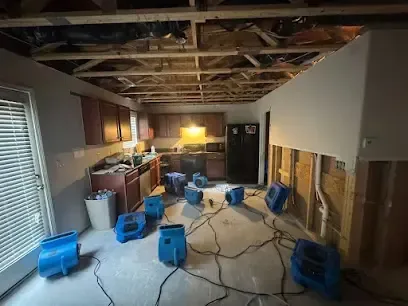
Protecting health during cleanup
Sewage can carry bacteria and other contaminants, so protective gear matters for anyone who has to be in the room.
- Waterproof gloves and boots.
- Eye protection.
- A mask suited to the work.
- Hand washing before eating or touching the face.
Why backups can follow wet weather in this part of Florida
Florida generally gets 50 to 55 inches of rain a year. Pinellas native soils are mostly poorly drained Spodosols over a very shallow water table, 1 to 6 feet down.
A saturated yard and a swollen creek leave less room for water to move away. Stevenson's Creek runs from Largo into Dunedin as a drainage creek, much of it in culverts, and it sometimes floods.
- Heavy rain adds water to a system already under load.
- A shallow water table leaves little room for the ground to absorb more.
- A blockage in a home pipe shows up first at the lowest drain.
What gets removed and what gets treated
The crew sorts every surface by one test: can it be cleaned, or did it soak the water up?
Porous materials are removed
Carpet, pad, insulation and the lower part of drywall are cut out and bagged. They cannot be made safe by drying.
- Carpet and pad.
- Baseboards and lower drywall.
- Wet insulation and cardboard.
Hard surfaces are cleaned and treated
Tile, tub surrounds, concrete and sealed floors are washed and treated. Cabinet bases are checked and removed if they soaked up water.
- Tile and tub surrounds are washed and treated.
- Concrete and sealed floors are cleaned and checked.
- Cabinet bases that soaked up water are removed.
What changes the size of the job
The size of a backup job depends on how far the water spread and what it touched.
- How many rooms the water reached.
- Whether it soaked carpet or reached drywall.
- How long it sat before cleanup began.
- Whether a floor drain, tub or toilet was the source.
Who else to involve
A restoration crew does not repair the pipe. A plumber clears or repairs the blockage, and the cleanup begins once the source is stopped.
The insurer should hear about the loss early, since coverage for a sewage backup may depend on the policy wording and any endorsement.
- A plumber for the blockage and the drain.
- The insurer, with photos and a description of the source.
- The utility, if the problem may be in the shared system.
Drying and clearing the space after cleanup
After the contaminated material is out, the space is dried. Structural drying uses air movers and dehumidifiers until readings come within 2 to 4 points of a dry reference.
Surfaces are treated and checked before flooring is replaced. Mold can start on damp wood and drywall within 24 to 48 hours, so drying does not wait.
Odor is the last thing to leave. If a smell remains after cleanup, something porous is usually still holding contamination, and the crew goes back to find it.
A safe return to the room
A room is ready for normal use when the source is fixed, the contaminated material is gone and the surfaces have been cleaned and treated. The crew checks moisture readings before flooring goes back.
Until then, keep children and pets out, and keep the door closed so air from the work area stays contained.
Questions
Is sewage backup the same as a plumbing leak?
No. Sewage is Category 3 and carries bacteria, so the cleanup removes porous materials and treats surfaces.
Can I clean up a small backup myself?
Even a small backup carries contamination. Protective gear and proper disposal matter, and a crew is the safer choice.
Why did the backup happen after a heavy rain?
Heavy rain can strain drainage, and a shallow water table leaves less room for the ground to absorb it. The exact cause needs a plumber to find.
Will carpet and pad be saved?
Usually not. Carpet and pad that soaked up sewage are removed and replaced.
Does insurance cover sewage backup?
It depends on the policy. Some need an added endorsement, so ask the insurer early.
How can I tell a clog in one drain from a sewer problem?
A clog in one fixture usually affects only that fixture. Several fixtures backing up together, or water rising in the lowest drain, points to a larger blockage that a plumber should check.