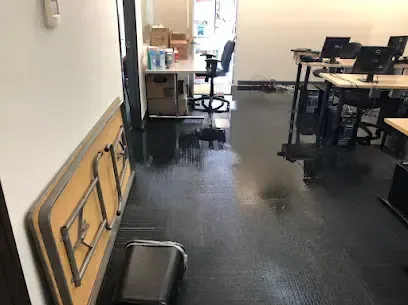
Downtown Dunedin is the stretch of Main Street from New York Avenue to the marina, and a business there loses sales for every day the doors stay shut. A leak, a backup or a storm can force the question of whether to close or stay open. This post covers the first day and how phased drying keeps part of the space working.
Key takeaways
- Shut off the water at the main valve, protect stock and records, and photograph the damage before anything is moved.
- Tell the landlord or property manager early, because a shared wall or ceiling can make the source someone else's responsibility.
- Drying in phases lets one part of the space reopen while the rest is still being worked on.
- Keep a record of lost stock, damaged equipment and closed days for the insurer.
- Sewage or floodwater is Category 3 water, and it changes what can stay in the room and what has to go.
What counts as a water emergency for a business
Any water that reaches floors, walls, ceilings or stock is an emergency for a shop, because customers see it and inventory soaks it up.
Hurricane Helene on September 26, 2024 affected more than 29,000 homes and businesses across Pinellas County, which shows how many commercial buildings one storm can reach.
- A burst or failed supply pipe in a back room or above a ceiling.
- A roof leak that works its way into the ceiling during a storm.
- Sewage pushing up through a floor drain or restroom.
- A water heater or appliance failure in a storage area.
- Water coming through a shared wall from the space next door.
The first steps for the owner
The early steps are about stopping the water and protecting what can still be saved. A water extraction crew can remove standing water while the owner handles stock and records.
- Shut off the water at the main valve if a pipe is the source.
- Keep staff and customers out of wet areas and away from outlets and equipment that touched water.
- Photograph and video the damage, the source and the stock before anything is moved.
- Move inventory, paper records and electronics to dry shelves or an unaffected room.
- Tell the landlord or property manager, then the insurer.
- Bring in a restoration team to extract water and start drying.
Keeping customers and staff safe while work goes on
Open doors and active drying can coexist, but only with clear rules. Wet floors, running equipment and open walls each add a hazard for staff and visitors.
The crew sets the boundaries, and the owner decides what the business can safely do inside them.
- Barricade wet and opened areas so no one walks through them.
- Post a plain sign at each entrance that explains which rooms are closed.
- Keep cords and hoses along walls and covered where they cross a walkway.
- Route deliveries and customers away from equipment.
- Hold food prep, cash handling and customer seating in rooms the crew has cleared.
Who is responsible: tenant, landlord and neighbors
In a downtown block the walls, ceilings and pipes are often shared, so the source decides who is responsible. A lease usually spells it out, and the answer can differ from one building to the next.
When the source is inside the shop
A failed water heater, a leaking sink or a broken appliance is usually the tenant's to report and repair. Photos of the source and the shutoff help when the insurer asks.
When the source is next door or above
Water that comes through a shared wall or from the unit overhead points to the neighbor or the building. The landlord should hear about it early, and the damage should be recorded before anything is cleaned.
How phased drying keeps the doors open
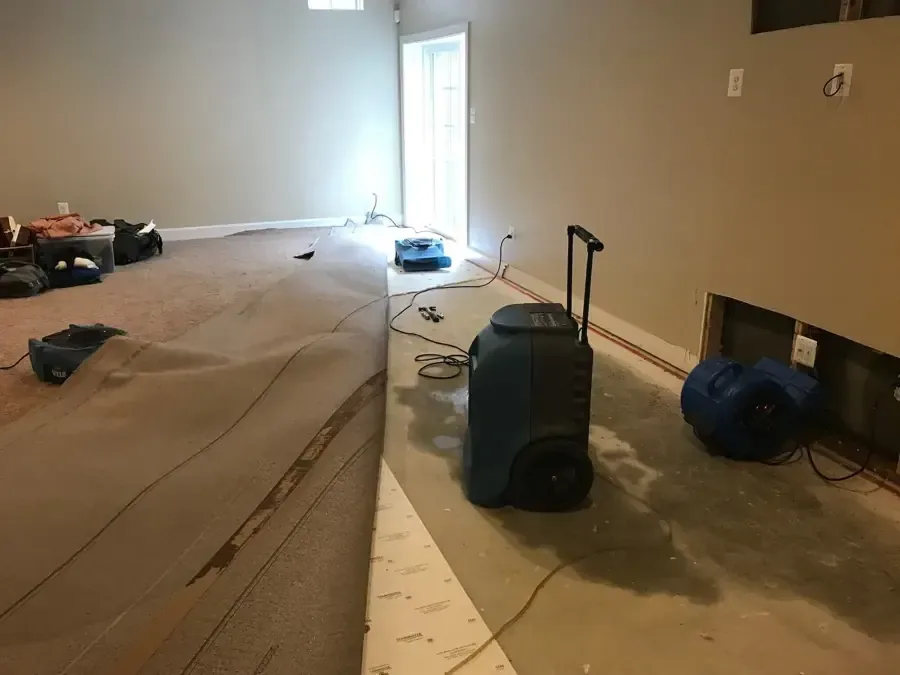
A commercial water damage job does not have to close the whole business. The crew works in zones, so the sales floor, the kitchen or the back office can reopen as soon as readings allow.
Containment and zones
Plastic barriers and separate drying zones keep wet areas apart from dry ones. Equipment is placed where the readings are highest.
A rolling plan for reopening
Each visit, the crew checks readings and moves equipment as zones come into range. The owner gets a clear picture of which rooms can open next and which still need drying.
- Zones are sealed off and dried one after another.
- Readings decide when a zone reopens, not a calendar date.
- Quiet equipment and off peak work can be arranged around opening times.
Documenting stock, equipment and closed days
A business claim usually covers more than the building. Stock, equipment and the days the doors were shut all need a record, and the best record starts on day one.
- Photograph shelves, displays and equipment before they are moved.
- List damaged stock with quantities and what it cost.
- Keep receipts for emergency repairs, rentals and cleanup.
- Log each day the space was closed or only partly open.
- Save the crew's moisture readings and equipment logs.
What changes for restaurants and food service
Kitchens and prep areas add rules of their own. Food that touched water is discarded, and surfaces that touch food are cleaned and treated before use.
- Open food and packaging near the water are thrown out.
- Prep tables, sinks and floors are cleaned and treated.
- Refrigeration and floor drains are checked before service resumes.
When the water is sewage or floodwater
Sewage and floodwater are Category 3, and the rules change. Porous materials such as ceiling tile, insulation, carpet and the lower wall are removed, and hard surfaces are cleaned and treated.
A restaurant kitchen or a counter where customers are served needs this done before reopening. If the source is a drain, a sewage backup cleanup crew handles the removal while a plumber finds the blockage.
Questions to ask the restoration team on day one
A clear plan on day one saves arguments later. These questions put the schedule, the zones and the records on paper.
- Which zones will be dried first, and which can reopen early?
- What readings will show that a zone is dry?
- How will equipment be placed around entrances and walkways?
- What will be removed, and what will be photographed first?
- How will the daily readings and logs be shared with the owner and the insurer?
Questions
Can a business stay open during water damage restoration?
Often part of it can. Phased drying seals off the wet zones so unaffected areas keep operating, and readings decide when each zone reopens.
Should the landlord or the insurer be contacted first?
Tell the landlord or property manager early, since the building may share the source. Contact the insurer soon after, with photos of the damage and the source.
What happens to wet stock and inventory?
Dry items are moved out of the wet area first. Items that absorbed water, especially from sewage or floodwater, are usually discarded after they are photographed and listed.
How does the crew keep customers safe during drying?
Wet zones are blocked off, cords are kept clear of walkways, and equipment is placed to avoid entrances. Category 3 areas stay closed until they are cleaned.
How long does a shop usually stay closed?
It depends on the source and the readings. Small leaks may reopen in part quickly, while a sewage loss or a flooded sales floor needs more time.