
When storm surge pushes saltwater into a house, the first day sets the course for everything after it. About 63 percent of the city's total area is water, and Hurricane Helene on September 26, 2024 sent surge across Pinellas County, where more than 29,000 homes and businesses were affected. This post walks through day one for a household that finds saltwater inside.
Key takeaways
- Surge water carries salt, silt and contaminants, so it is treated as Category 3 and handled with protective gear.
- Photograph every room before anything is moved, then lift valuables and keep children and pets out of the water.
- Standing water and soaked pad come out first, because porous materials hold saltwater long after the surface looks dry.
- Most homeowners policies exclude flood, so ask early whether a National Flood Insurance Program or private flood policy applies.
- Drying the slab, framing and wall bottoms takes longer than removing the water, and moisture readings show when it is done.
Why surge water is not handled like a pipe leak
A broken pipe puts clean water on the floor. Storm surge brings saltwater mixed with silt, yard debris and whatever the water picked up on its way in.
For that reason the restoration team treats surge as Category 3, the most contaminated class, and removes soaked porous materials instead of trying to save them.
Pinellas County says everyone in the county is in a flood zone, and the high risk zones are the A zones and the V zones. Evacuation zones run from A through E.
- Salt stays in pad, drywall paper and wood long after the surface looks dry.
- Silt settles under flooring and at the bottom of wall cavities.
- Water that reached outlets or appliances means the power stays off until the system is checked.
The first steps for the household
Safety comes first. Stay out of standing water if power may still be on, and keep cuts and open skin away from it.
Once it is safe to be inside, document the loss before anything moves. Insurers and restoration teams both work from what was recorded at the start.
A room flooded by surge should not be left to dry with household fans alone. Moving contaminated air and wet material around only spreads the problem.
- Photograph and video each room, including the waterline on walls and furniture.
- Write down when the water came in and how high it rose.
- Lift papers, photographs, electronics and small valuables onto high shelves or out of the house.
- Keep children and pets out of every affected room.
- Do not run a household vacuum on standing water.
What saltwater leaves behind
Salt and silt change what can be saved. The question for each material is simple: does it soak the water up, or can it be cleaned and dried?
Porous materials usually come out
Carpet, pad, insulation and the lower part of drywall hold saltwater and the contaminants in it. Drying them in place does not clean them, so they are cut out and removed.
- Carpet and pad are pulled up and hauled out.
- Baseboards and the bottom of the drywall are cut back above the waterline.
- Wet insulation inside the wall cavity comes out with the drywall.
Hard surfaces and structure can be dried
Tile, concrete and framing can be cleaned and dried. The slab and the wall framing are dried until readings match a dry reference, which takes longer than removing the water.
What the extraction crew removes first
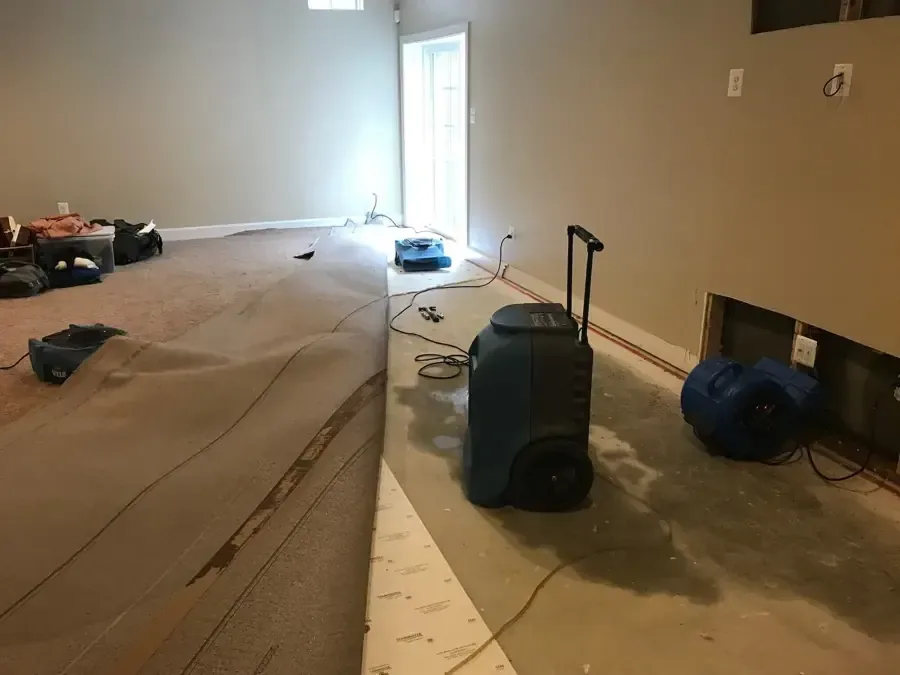
The order of work matters. Standing water comes out first, using pumps and extraction units, since the longer water sits the deeper it travels into the structure.
A water extraction job after a surge moves from the lowest point of the house outward, then turns to the materials that cannot be saved.
Most of this happens early, while the walls can still be opened easily and the water is easy to reach.
- Pumping or extracting standing water room by room.
- Removing wet carpet, pad and damaged flooring.
- Cutting the lower drywall above the waterline so the cavity can be reached.
- Hauling out soaked contents that cannot be cleaned.
Flood zones and insurance questions to sort out early
Most homeowners policies exclude flood damage. Flood coverage is a separate policy, written through the National Flood Insurance Program or a private insurer.
That makes it worth contacting the insurer before cleanup is finished, so the adjuster can see the loss. A storm surge and flood cleanup crew keeps photos, moisture readings and equipment logs so the claim file shows what was wet and when it was dried.
- Ask whether the policy covers wind driven rain, flood, or both.
- Keep receipts for emergency repairs and temporary housing.
- Save damaged items until the insurer says they can be thrown out.
Drying the structure after the water is out
Pulling out the water is the visible part. The slower part is drying the slab, framing and wall bottoms, which keep moisture after the floor looks dry.
Dehumidifiers and air movers run while the crew takes moisture readings on each visit, until the readings come within 2 to 4 points of a dry reference. Structural drying is finished when the numbers say so, not when the room feels dry.
Wet drywall and wood can start to form mold within 24 to 48 hours, which is why drying begins as early as possible.
- Moisture readings on the slab, framing and drywall.
- Humidity in the room air, because humid Gulf air slows drying.
- Equipment moved as the wet zone shrinks.
Mistakes that make surge damage worse
Most extra damage after a surge comes from waiting or from well meant shortcuts. A few habits are worth avoiding.
- Closing a wet room up and leaving it, which traps moisture in the walls.
- Painting or sealing over damp drywall or baseboards.
- Keeping soaked pad and carpet because the top looks fine.
- Tossing damaged items before they are photographed.
- Turning the power back on in a flooded area before it is checked.
Questions
Is saltwater from a storm surge worse than rain water?
Surge water is treated as Category 3 because it carries silt and contaminants along with the salt. Rain that enters through a roof is usually cleaner, but it can still soak insulation and ceilings.
Can wet carpet from a surge be saved?
Carpet and pad that sat in surge water are normally removed. Salt and contaminants stay in the pad, and drying it in place does not clean it.
Does homeowners insurance cover storm surge flooding?
Most homeowners policies exclude flood, so storm surge is usually a flood policy matter. The policy wording and the insurer's instructions decide what applies.
How do I know the house is dry after the water is out?
Moisture readings on the framing, drywall and slab are compared with a dry reference, and the equipment stays until the readings match.
What is the first thing to do if water is still in the house?
Stay safe, keep the power off in wet areas, document the loss, and bring in a restoration team that can extract the water and start drying.